Modafinil has built a reputation as one of the most talked-about wakefulness-promoting medications, prescribed for conditions like narcolepsy, obstructive sleep apnea, and shift work sleep disorder [1]. But a question that comes up constantly among patients and off-label users is simple: does modafinil actually affect how well you sleep once its effects wear off? The short answer is yes — but the details matter a lot more than the short answer suggests.
What Modafinil Does to the Brain?
Modafinil is a eugeroic [2], a class of drugs designed to promote wakefulness without the jittery, crash-prone profile of classic stimulants like amphetamines. It works primarily by increasing dopamine signaling in the brain and influencing other wake-promoting pathways, including histamine and orexin systems [3]. This is part of why users describe its effects as “clear-headed focus” rather than the wired, racing feeling associated with caffeine or traditional stimulants.
Because it directly targets the brain’s wakefulness circuitry, it makes sense that modafinil would also interact with the systems that regulate sleep—and research confirms it does.
The Direct Impact of Modafinil on Sleep Quality
When taken later in the day or too close to bedtime, modafinil commonly delays sleep onset, meaning it can take much longer to fall asleep. Clinical research and prescribing information consistently list insomnia [4]as one of the most frequently reported side effects of the medication.
Beyond simply delaying sleep, modafinil can also affect sleep architecture — the structure and cycling of different sleep stages (light sleep, deep sleep, and REM sleep) [5] that the body moves through each night. Some studies suggest it can reduce total sleep time and shift the balance of these stages when taken without adequate spacing before bed, even in people who don’t consciously feel “wired.”
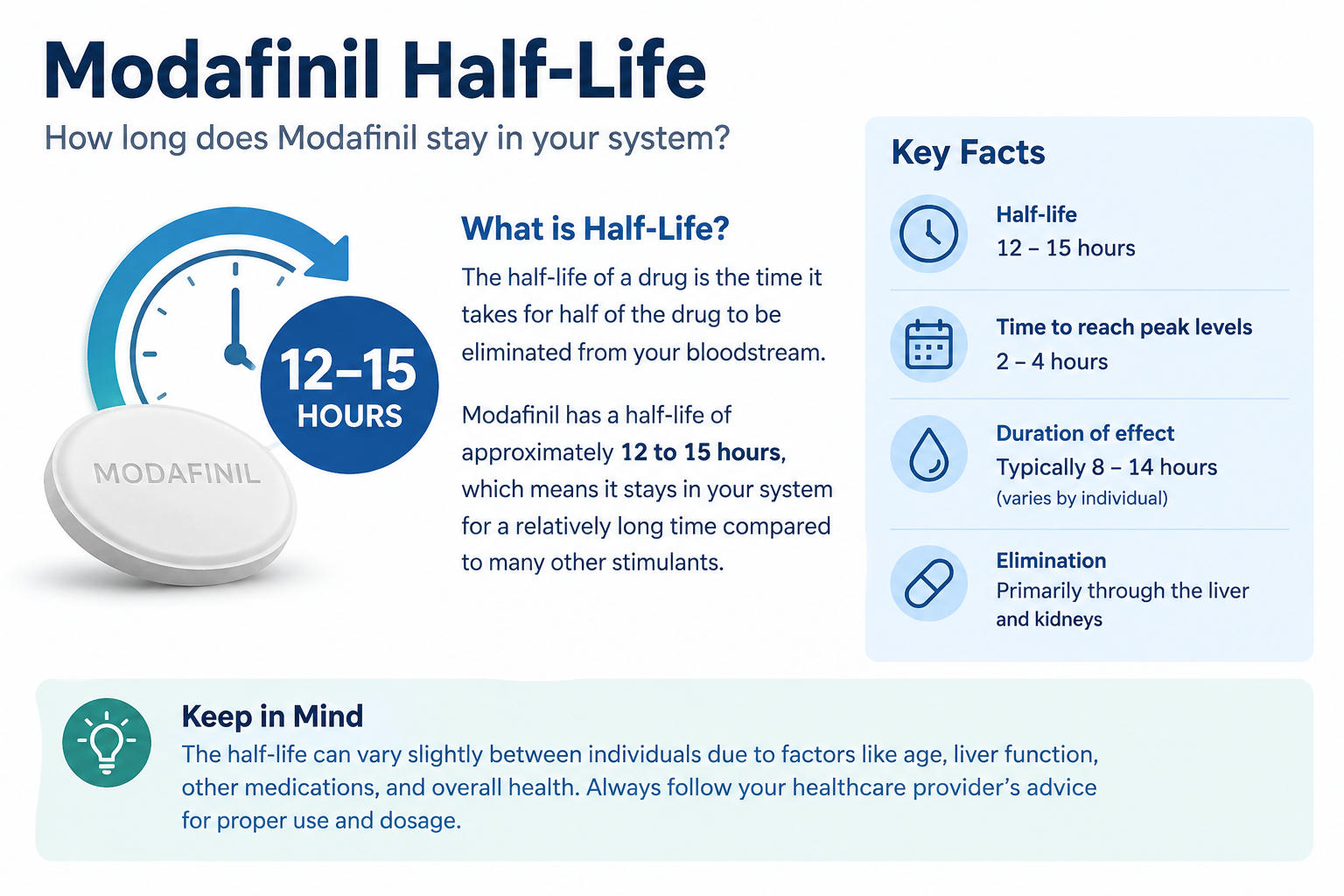
That said, the effect depends on dose and timing. Taken early in the day, with several hours of buffer before an intended bedtime, many users report little to no disruption to their normal sleep. The medication’s relatively long half-life (roughly 12–15 hours) is the key variable: it’s still active in the system well after the “alert” feeling has faded, which is often the hidden cause of sleep problems people don’t immediately connect to their earlier dose.
Why This Matters for People Using Modafinil Against Sleep Deprivation?
There’s a paradox worth pointing out here. Modafinil is often reached for specifically because of sleep deprivation — an all-nighter, an overnight shift, a stretch of insomnia [6]. But if it’s used carelessly, it can extend the very problem it’s meant to counteract by pushing sleep further out of reach the following night.
For shift workers in particular, research on modafinil’s role in shift work sleep disorder shows it can improve alertness during a shift without necessarily harming the recovery sleep that follows — but only when timing is carefully managed around the work schedule, not used as a general late-day pick-me-up.
How Other Factors Influence Modafinil and Sleep Quality?
Not everyone experiences the same relationship between modafinil and sleep quality. Several factors shape how significant the impact is:
- Dose and timing: Larger doses and later administration are more strongly linked to sleep disruption.
- Individual metabolism: How quickly someone clears the drug affects how long it remains active in the body.
- Existing sleep conditions: People with narcolepsy or sleep apnea may respond differently than people without an underlying sleep disorder.
- Frequency of use: Regular, non-medically supervised use may compound sleep debt over time rather than resolve it.
Common Sleep-Related Side Effects
Beyond delayed sleep onset, people using modafinil sometimes report:
- Lighter, less restorative sleep
- Waking up during the night
- Feeling “wired but tired” the following day
- A cumulative sense of sleep debt with repeated use
These effects tend to be more pronounced with higher doses or when taken in the afternoon or evening.
Tips For Using Modafinil Responsibly Around Sleep
Because modafinil is a prescription medication classified as a controlled substance in many countries [7], any decision about dosage, frequency, or timing should be made with a licensed healthcare provider — not based on generic online guidance.
A doctor can account for individual health history, other medications, and the specific condition being treated, which matters a great deal given modafinil’s potential to disrupt sleep architecture if mistimed.
A few general, non-prescriptive principles are worth keeping in mind:
- Sleep disruption risk increases the later in the day the medication is taken.
- It is not intended as a nightly or long-term substitute for treating the underlying cause of sleep deprivation, such as poor sleep hygiene, untreated insomnia, or an irregular schedule.
- Anyone noticing persistent sleep problems while using modafinil should raise it with their prescribing doctor rather than adjusting the dose independently.
In The END…
Modafinil can affect sleep quality—primarily by delaying sleep onset and altering normal sleep architecture —especially when taken later in the day or at higher doses. It’s an effective tool for managing wakefulness in specific medical contexts. Still, it isn’t sleep-neutral, and the insomnia it can cause reminds us that it treats symptoms of sleepiness, not the root causes of poor sleep. Anyone considering or currently using modafinil should treat sleep-quality changes as a signal worth discussing with a healthcare provider, rather than managing them through trial and error alone.
Medical Disclaimer: This article is for informational purposes only and is not a substitute for professional medical advice. Consult a licensed healthcare provider before starting, stopping, or adjusting any prescription medication.
References:
- https://www.nejm.org/doi/full/10.1056/NEJMoa041292
- https://pmc.ncbi.nlm.nih.gov/articles/PMC3286657/
- https://pmc.ncbi.nlm.nih.gov/articles/PMC6763926/
- https://www.drugs.com/comments/modafinil/sfx-insomnia.html
- https://www.youtube.com/watch?v=KpBLW21-o9Y
- https://en.wikipedia.org/wiki/Modafinil#Society_and_culture

Dan is a research associate at Harvard and a father of two. Over the past several years, he’s invested tens of thousands of dollars personally exploring the world of nootropics — testing products, researching formulations, and learning what actually works (and what doesn’t).
This site is his way of giving back to a community that’s taught him so much along the way. Every article here is personally researched and written by Dan, drawing on both his academic background and years of firsthand experience in the space.